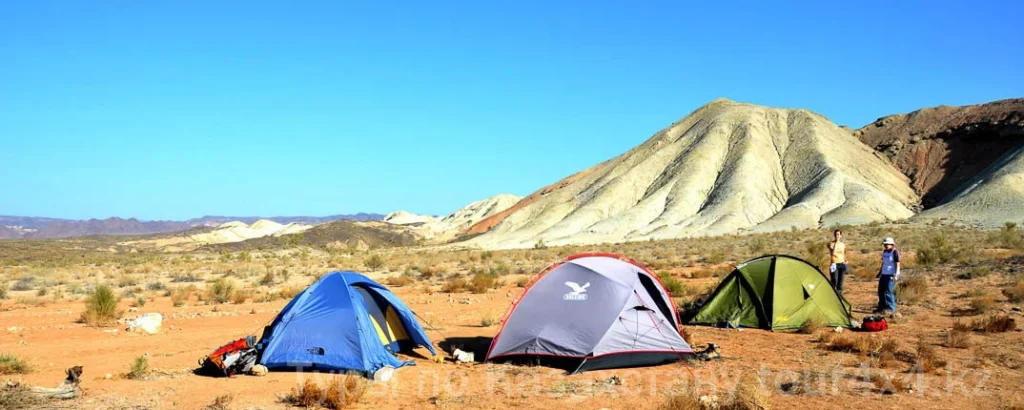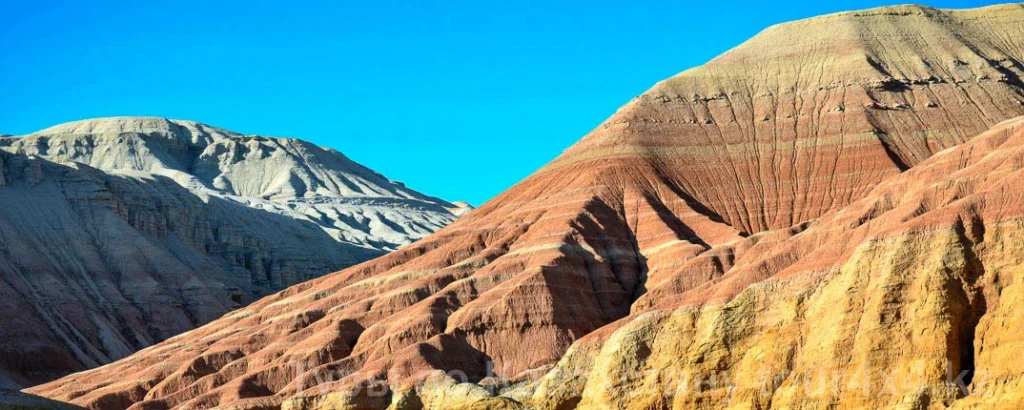
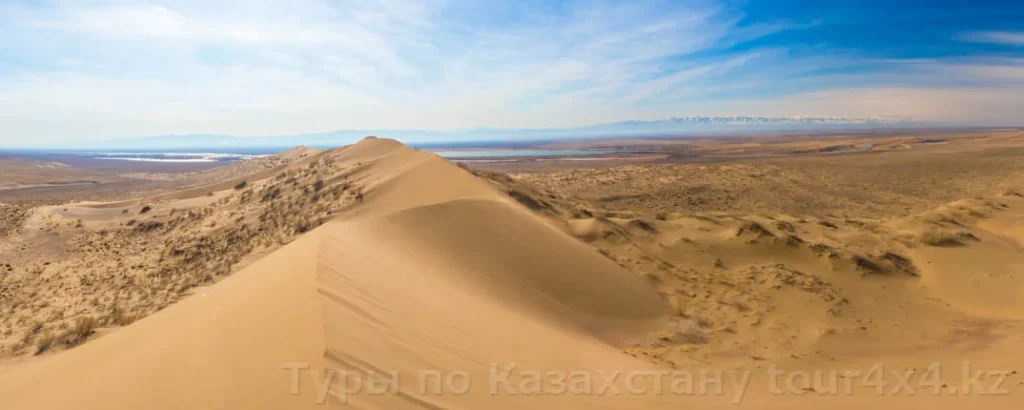
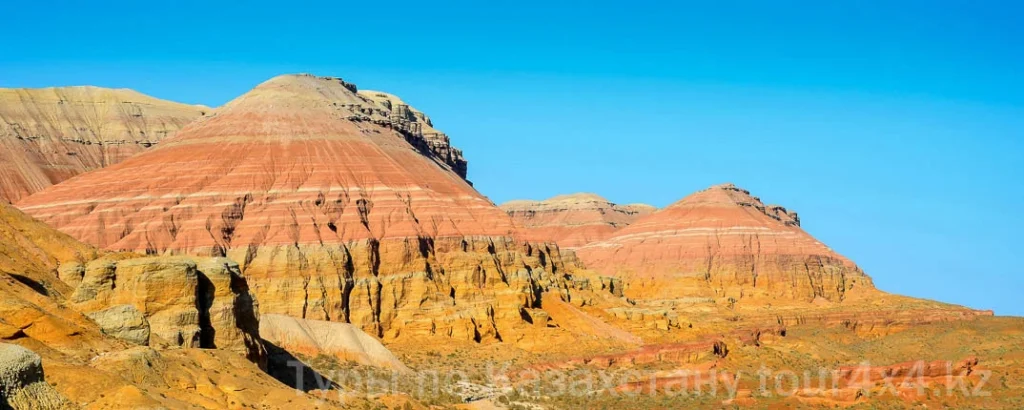
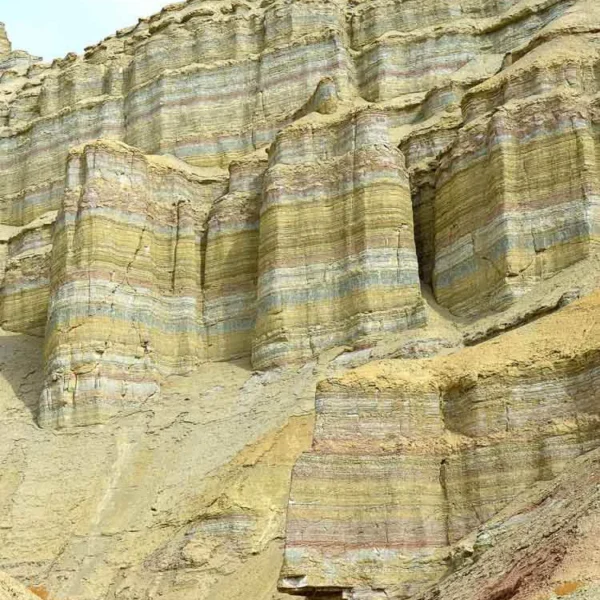
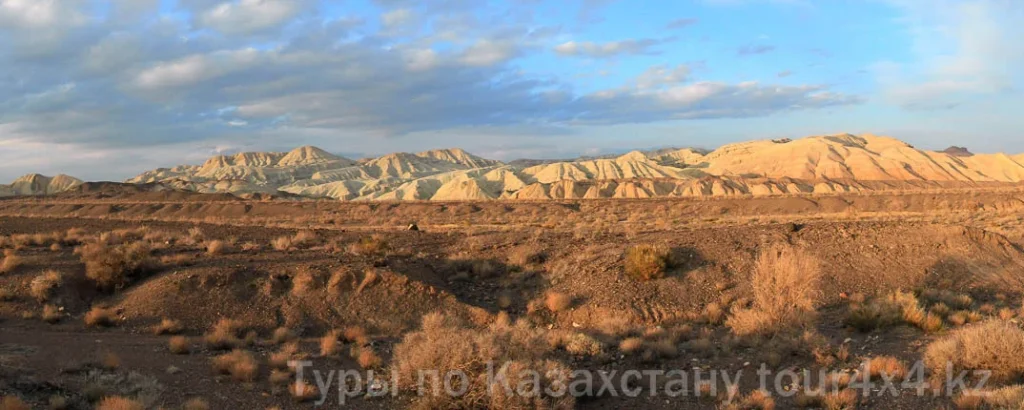
 Aktau — chalk mountains formed by Cenozoic sediments. These mountains consist of gypsum-bearing clay, in which water and wind have carved fanciful canyons over millennia. The main feature of this massif is the complete absence of vegetation, so the landscape resembles fantastic lunar scenery. The mountains are characterized by bare and steep slopes, strong dissection caused by intensive erosion as a result of downpours and mudflows. Aktau is a unique, world-famous paleontological site. 56 species of Early Miocene flora have been identified here: pine, spruce, birch, alder, oak, walnut, chestnut, linden, hackberry, pistachio, tree of heaven and many others. In the layers of Paleogene-Neogene lake deposits the remains of ancient animals (crocodiles, tortoises, giant rhinoceroses, primitive predators) are perfectly preserved; their age is estimated at 25-30 million years. The Katutau Mountains are located next to Aktau.
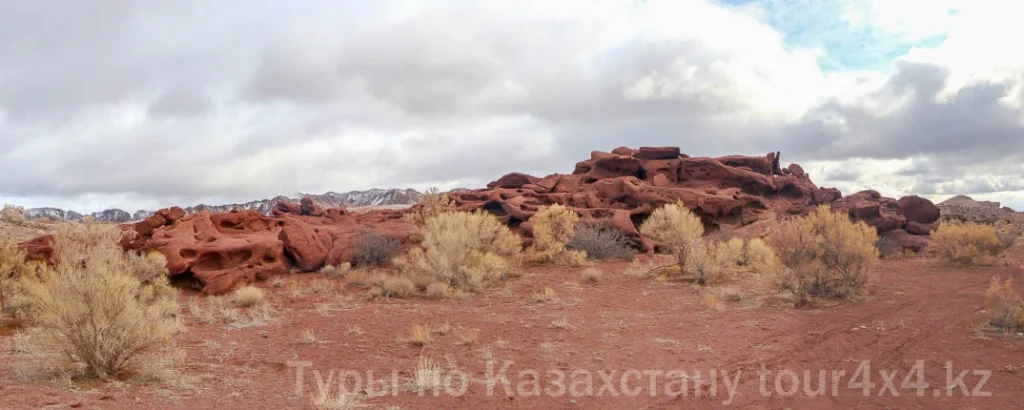
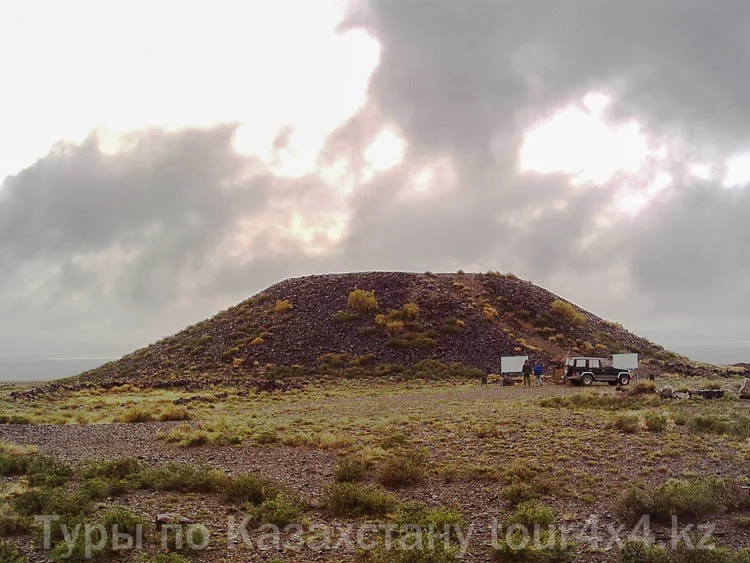
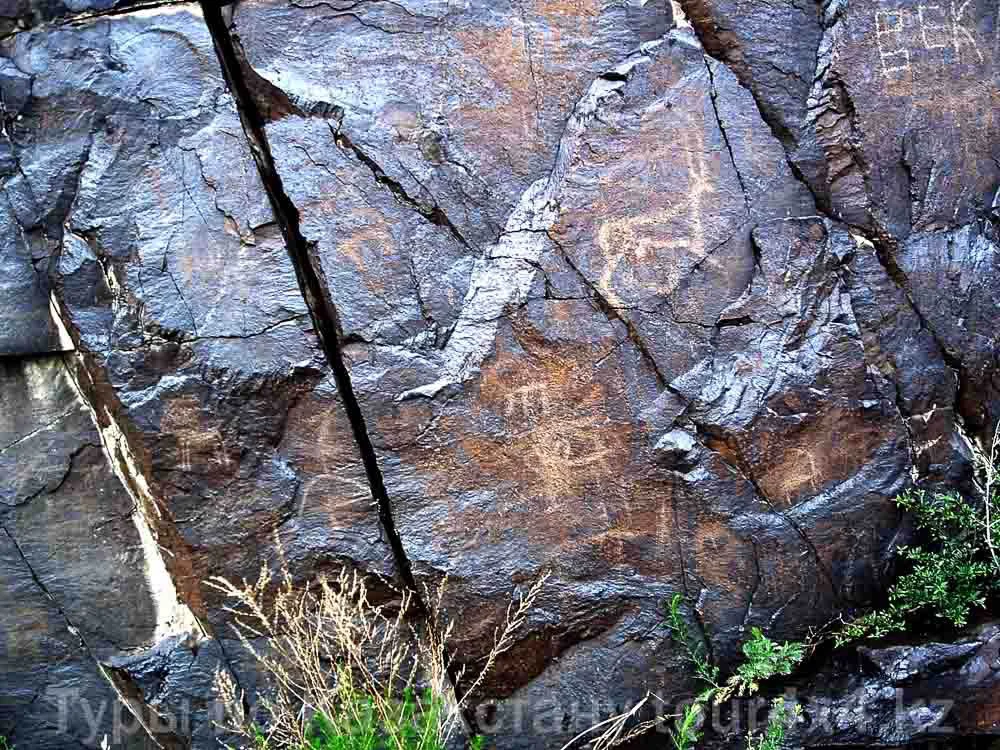
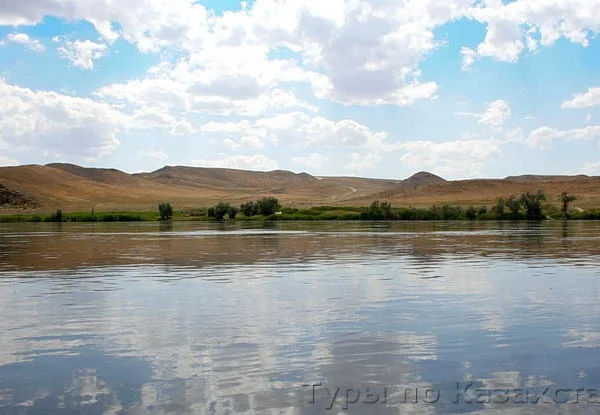
The Ili River is the main water artery and natural boundary of the Altyn-Emel reserve, originating on the territory of China. It belongs to rivers with mixed feeding. A weakly pronounced spring flood usually begins in late April. In May there is a flood from the melting of mountain snows, which builds up through July and August. Then the water begins to recede, and in September its usual level sets in. In winter the Ili River freezes every year for several months. The riverbed often breaks into branches and channels separated from the main stream by islets covered with reeds, cattails or shrub and tree vegetation
The climate is desert, sharply continental, with a dry cold winter and hot summer. The annual precipitation does not exceed 300-330 mm, with the predominant amount falling in April-May. The driest month is September. Average annual temperatures range between 4-5°C. The average January temperature is -8.5°C, the minimum is -29.5°C. The average July temperature is +26°C, the maximum is +45°C. The period with an average temperature above 0°C lasts about 260 days, and above 10°C — 186 days.
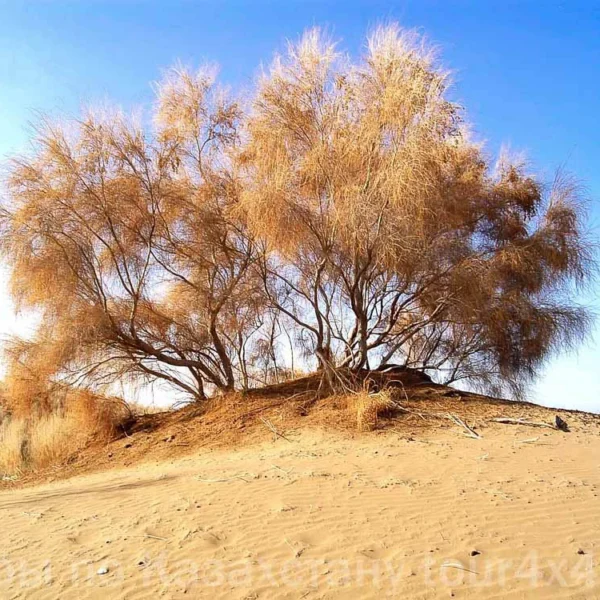
The flora of the national park numbers 1500 species of higher plants, including 22 rare species listed in the Red Book. Of particular interest among them are relics (the Dzungarian astragalus, the Ili ferula) and endemics: the Albert and short-spurred tulips, Muslim’s catchfly, the Ili barberry, Dzungarian chesneya, the kopal astragalus, Vital’s columbine, Herder’s cahris, the rock carrot, Goloskokov’s hair-rib grass and others.
Most of the park’s plants have useful properties. Many of them serve as forage for wild animals. Seeds and fruits are eaten by birds and mouse-like rodents, while the vegetative parts are eaten by ungulates. Especially valuable are the eastern feather grass, Japanese brome, shrubby atraphaxis, keireuk, boyalych, black saxaul, the beautiful gonioleimon, white-earth wormwood and others. There are also nectar-bearing plants (chingil, camel thorn, caragana), essential-oil plants (thyme, ziziphora, dragonhead) and medicinal plants, etc.
amounts to about 260 days, and with a temperature above 10°C — 186 days.
 Insect fauna is provisionally estimated at more than 5000 species, with at least 500 of them beetles alone living in the tugai. 25 species are listed in the Red Book. These include dragonflies (the banded demoiselle and the emperor dragonfly), a mantis (the short-winged bolivaria), grasshoppers (the steppe saga and the dark-winged grasshopper); beetles (Solsky’s ground beetle, Chicherin’s hunchback beetle, the Ili musk longhorn beetle, Galuzo’s longhorn beetle, the tamarisk longhorn beetle, the dotted ladybird and the two-spotted chilocorus); hymenopterans (the steppe scoliid wasp, the yellow-winged sphecid wasp, Prionyx haberhaueri, etc.); dipterans and lepidopterans (the turanga red underwing, Myrmekida’s blue and Tatyana’s blue) and others.
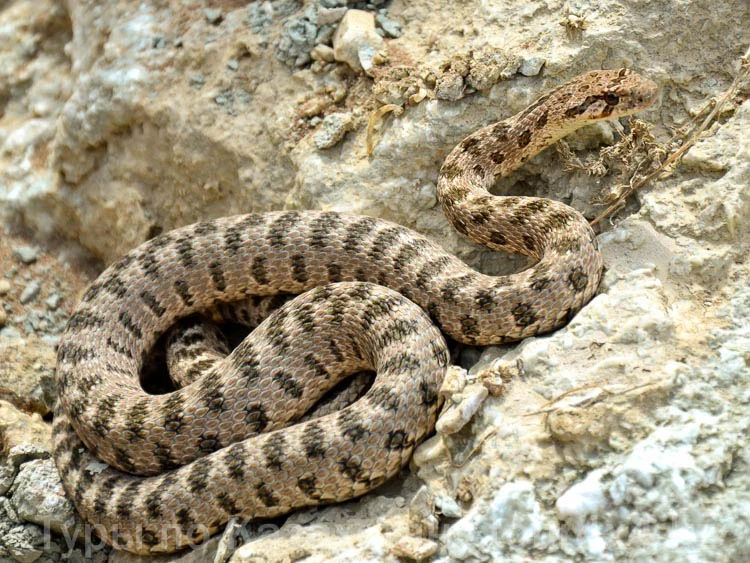
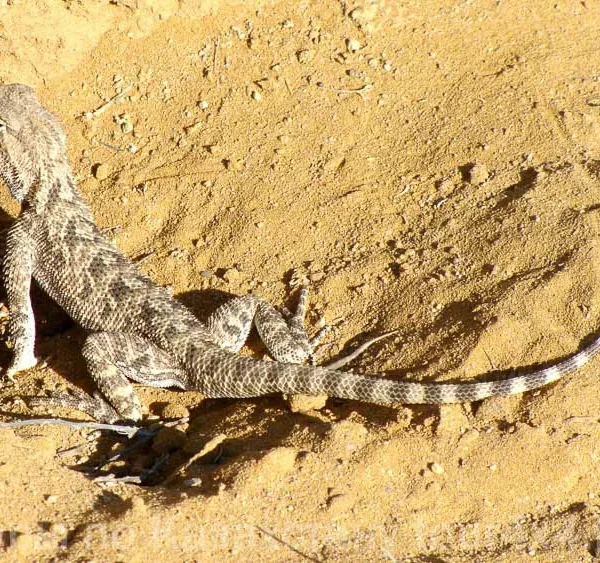
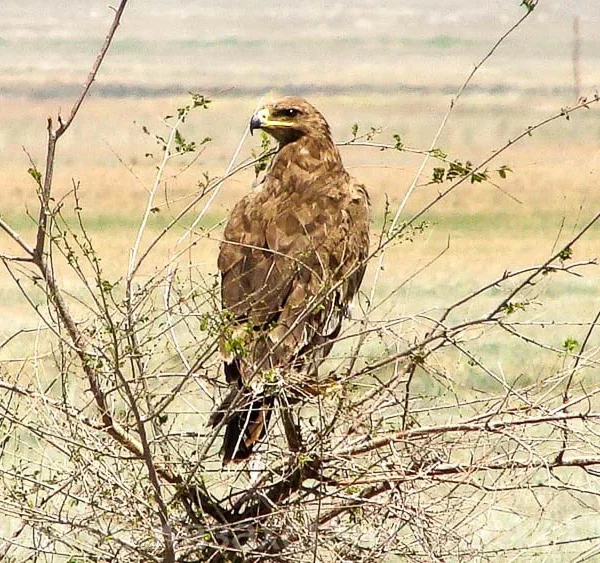
The vertebrate fauna is also very diverse. 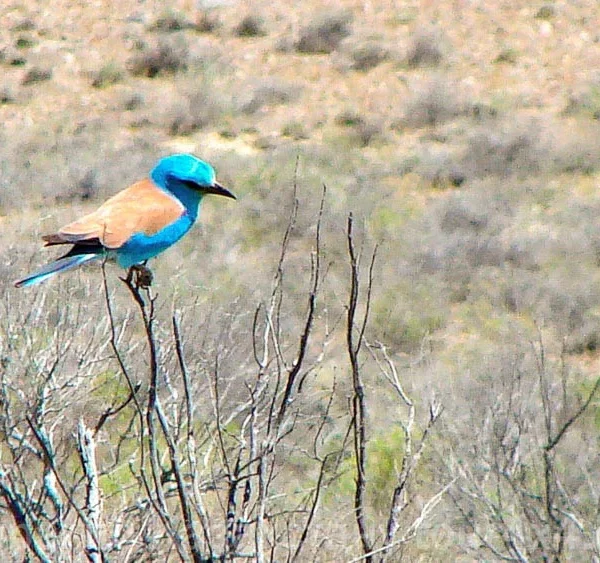 The Ili River and the Kapchagay Reservoir are home to 20 species of fish, including 5 native species, three of which (the Balkhash perch, the Ili marinka and the plain gudgeon) are endemics. The other fish are acclimatized (wild carp, grass carp, silver carp, asp, catfish, bream, zander, the Caspian roach and others). The ship sturgeon, the Aral barbel, the Ili marinka and the Balkhash perch are Red Book species. There are only 3 species of amphibians — the green toad and the Siberian and lake frogs. Reptiles are represented by 25 species. In the mountains the Alai spectacled lizard, the pit viper, the steppe viper and the patterned racer are common, while in the desert and semi-desert there are the steppe tortoise, the takyr and variegated toad-headed agamas, the skink gecko and the gray gecko, the steppe agama, several species of racerunners, the arrow snake and others. Altyn Emel. Birds. There are about 200 bird species, 174 of them nesting. 18 species are listed in the Red Book: the black stork, the ferruginous duck, the osprey, the short-toed eagle, the imperial eagle, the golden eagle, the white-tailed eagle, the Egyptian vulture, the bearded vulture, the Himalayan griffon, the saker falcon, the common crane, the demoiselle crane, the houbara bustard, Eversmann’s pigeon, the black-bellied sandgrouse, the Pallas’s sandgrouse and the eagle-owl.
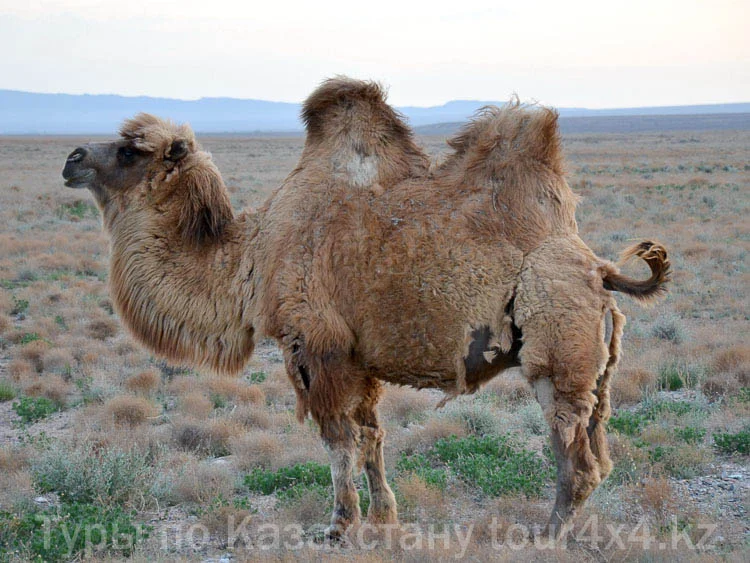
 The territory of the park is home to more than 70 species of mammals, including 7 Red Book species: the stone marten, the marbled polecat, the Central Asian river otter, the Tien Shan argali, the snow leopard, the goitered gazelle and the kulan. Altyn-Emel hosts the largest populations of the goitered gazelle (4000 head) and the Siberian ibex (about 1500 individuals). In addition, there are 4 more species of even-toed ungulates (wild boar, roe deer, saiga and argali) and 2 species of odd-toed ungulates (the kulan and Przewalski’s horse).
In Altyn-Emel National Park, thanks to the efforts of its staff, the full diversity of living and non-living nature is preserved, scientific research is conducted on various topics, and a Nature Chronicle is kept. Great attention is paid here to the development of ecological tourism.
This article was prepared using materials from open sources
Below are links to detailed descriptions of the tours and excursions in which you can visit Altyn-Emel National Park. Two- and three-day tours from Almaty with a visit to the Altyn-Emel reserve. Altyn-Emel Park is one of the most beautiful places in Almaty Region and certainly one of the best natural attractions of Kazakhstan. Have pleasant travels and unforgettable impressions!